Stochastic Gasoline Supply Chain Problem
Summary
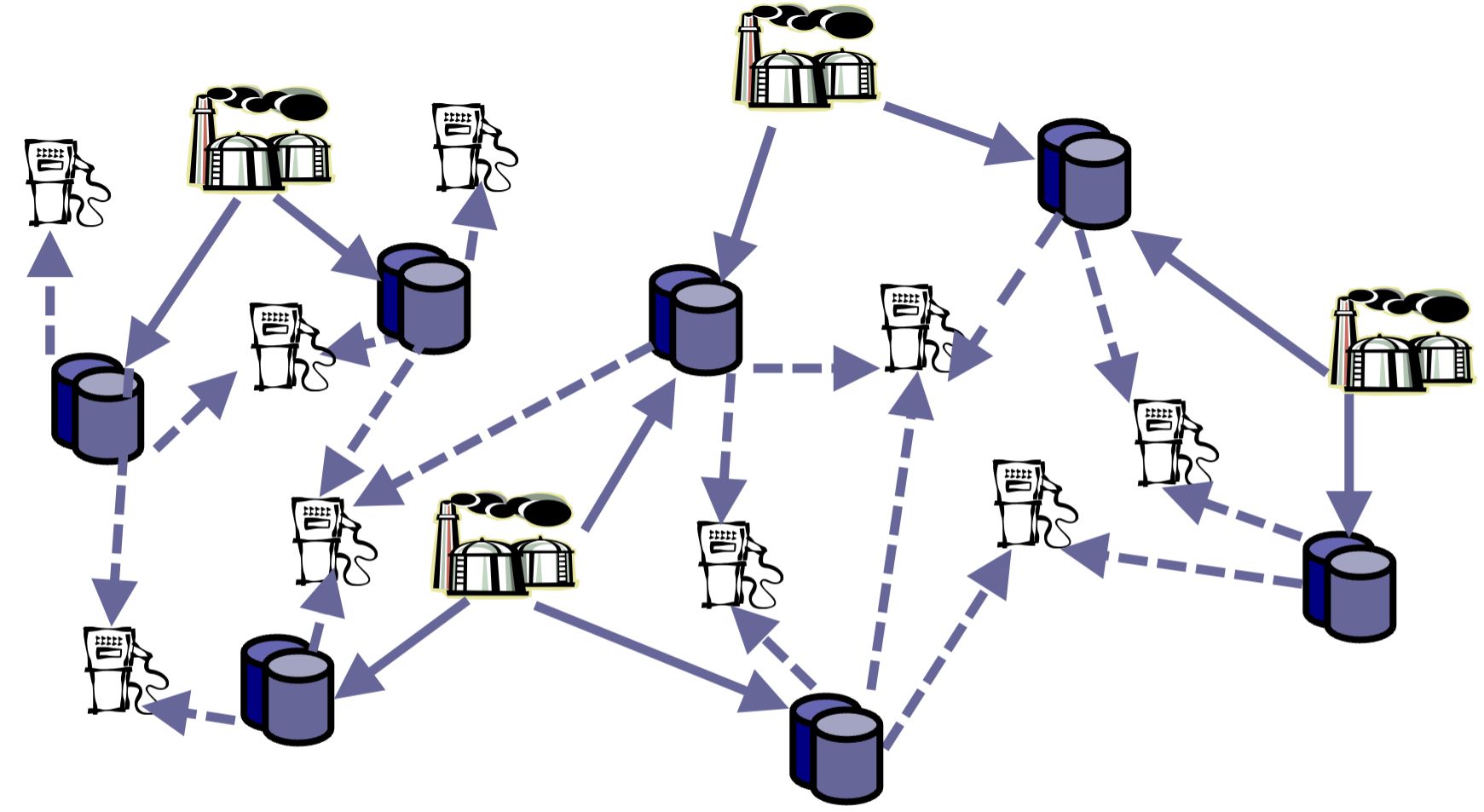
Consider the gasoline supply chain consisting of 4 refineries, 6 stock depots and 43 retail outlets. There are 3 levels: refineries, stock depots and retail outlets. The optimal quantities of gasoline for transportation between different levels of the gasoline supply chain must be determined.
The aim is to reduce the total cost, which includes transportation and inventory holding expenses at different points in the supply chain, and to decrease stock outages at various retail outlets. The problem is complicated because we have stochastic production at the refinery level and stochastic demand at the retail outlet level.
The quantities of gasoline produced by refineries vary, and they transport it to stock depots for cross-docking. Gasoline is supplied by stock depots to retail outlets, which receive stochastic demand from end customers. Inventory holding costs are a concern for all 3 supply chain levels. Furthermore, retail outlets are at risk of stockouts due to not meeting customer demands.
To minimize the total cost, we need to figure out how much gasoline is to transport between each level of the supply chain by calculating the combined cost of transportation and inventory holding. Minimizing stock outs at the retail outlets is also important for business reasons.
The solution to this problem reduced total costs by 17%.
It should also be noted that there is often a need to divide this general problem into sub-problems of the supply chain for each level separately due to their different owners. Then there is a new problem of optimal coordination, and cooperation between these 3 levels becomes especially valuable and important. But this is another interesting case.
To discuss a case for your business, please contact us →